
Etude No. 1 Online Classical Guitar Lesson


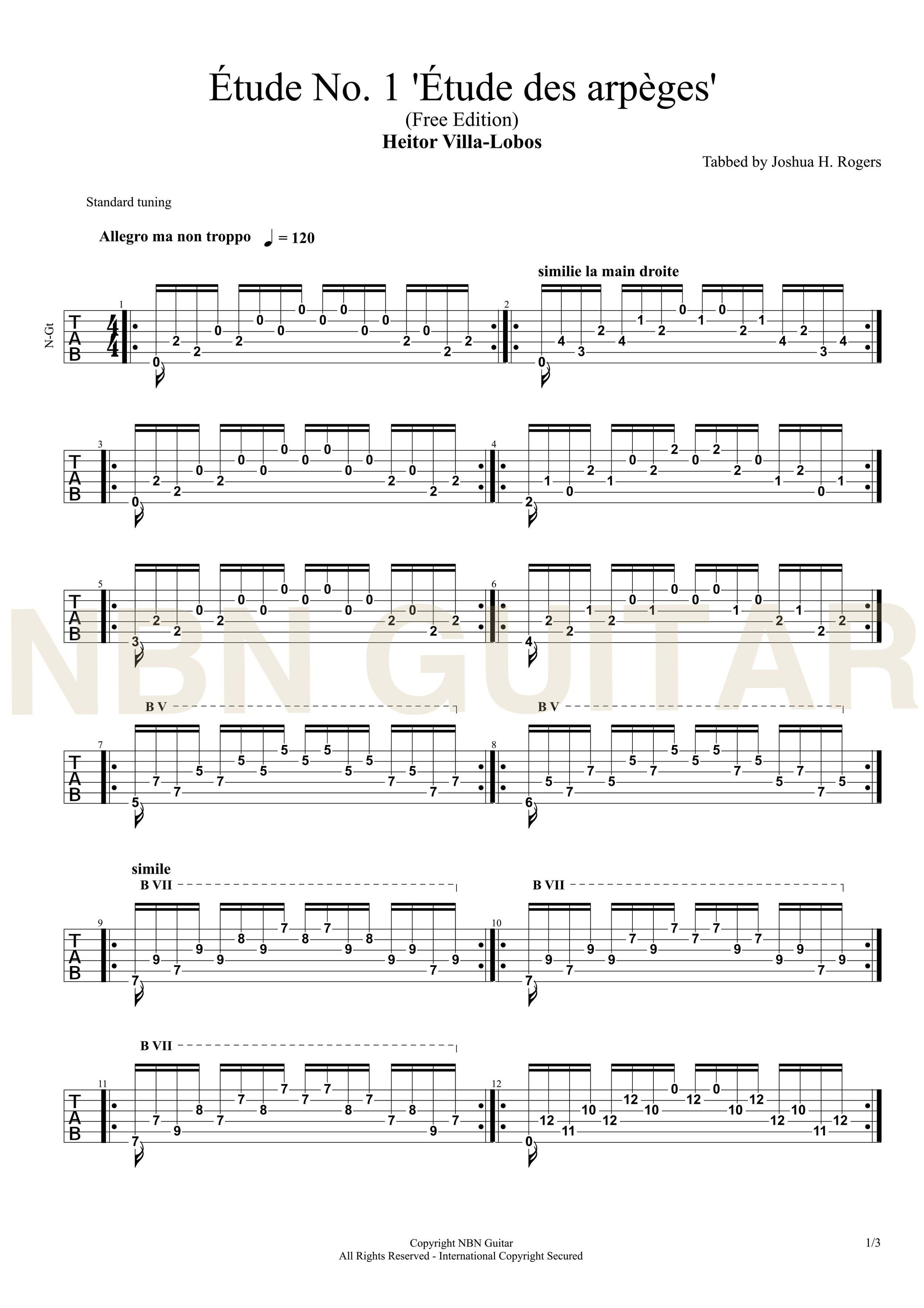
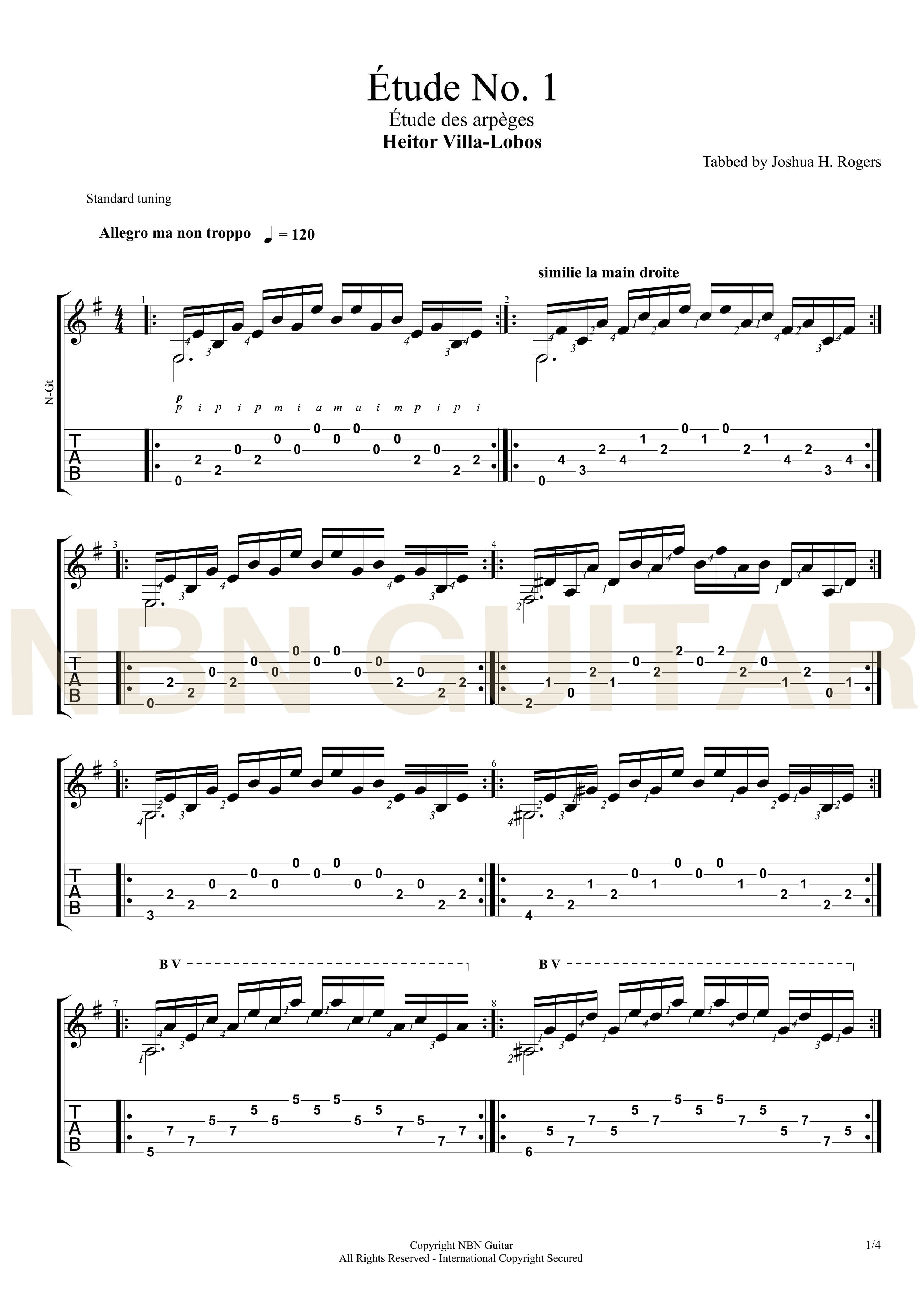
This is Etude No. 1 from the famous collection of 12 etudes written by Heitor Villa Lobos during the 20th century. It is without a doubt a collection of fine etudes that happily combine beautiful compositions with an aesthetic and didactic appeal.
These etudes are aimed at the dedicated student that is already quite far along as they are of exceptional difficulty and pose numerous technical and interpretative challenges throughout.
9 pages featuring:
Sheet music with tabs underneath (complete fingerings for both hands)
Sheet music only
Tabs only
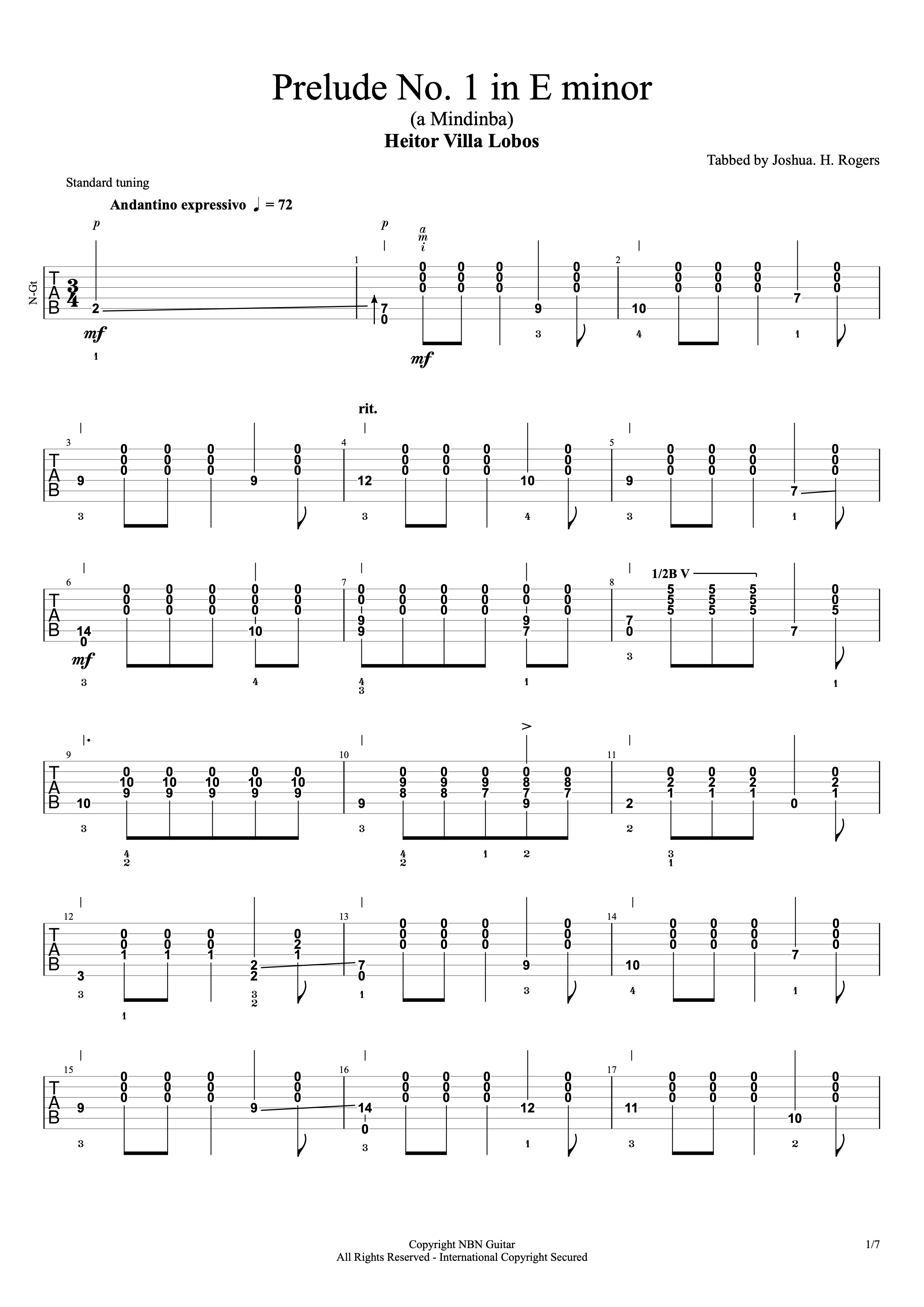
Prelude No. 1 belongs to his 'Cinq Preludes' written in first half of the 20th century by the great Brazilian composer.
The Prelude, whilst not being extremely difficult is still very beautiful and contains many of the idiosyncratic compositional techniques that Villa Lobos is known for such as open strings, melodies in the lower registers and multiple notes of the same pitch played on different strings simultaneously.
My arrangement has complete fingering suggestions for both hands to guide you through the piece from beginning to end.
22 pages featuring:
Sheet music with tabs underneath (complete fingerings for both hands)
Sheet music only
Tabs only
Introduction
Every now and again a composer is able to combine technical development with extraordinary beauty and grace. Heitor Villa Lobos belongs to this rare breed. His 12 Etudes written for guitar and dedicated to the illustrious maestro Andres Segovia are outstanding examples of stunning pieces that challenge and build upon the foundations of classical guitar technique whilst incorporating delightful melodies and enchanting compositional elements.
Performance Points
Etude No. 1 is focused primarily on developing the right-hand. Only a single pattern is used for the entire piece with the exception of an arpeggio 'run' including lower chromatic auxiliary notes and the final couple of bars. Apart from those digressions the constant pattern is this:
P, i, P, i, P, m, i, a, m, a, i, m, P, i, P, i
The best approach is to keep the hand as still as possible and relaxed. Although the pattern itself is quite simple you will need to work towards developing the stamina required to get through the piece from beginning to end.
Conclusion
Classical guitar technique is something that we're always striving to perfect. My suggestion is to make sure you purchase a copy of Villa Lobos' book for yourself and get learning.
